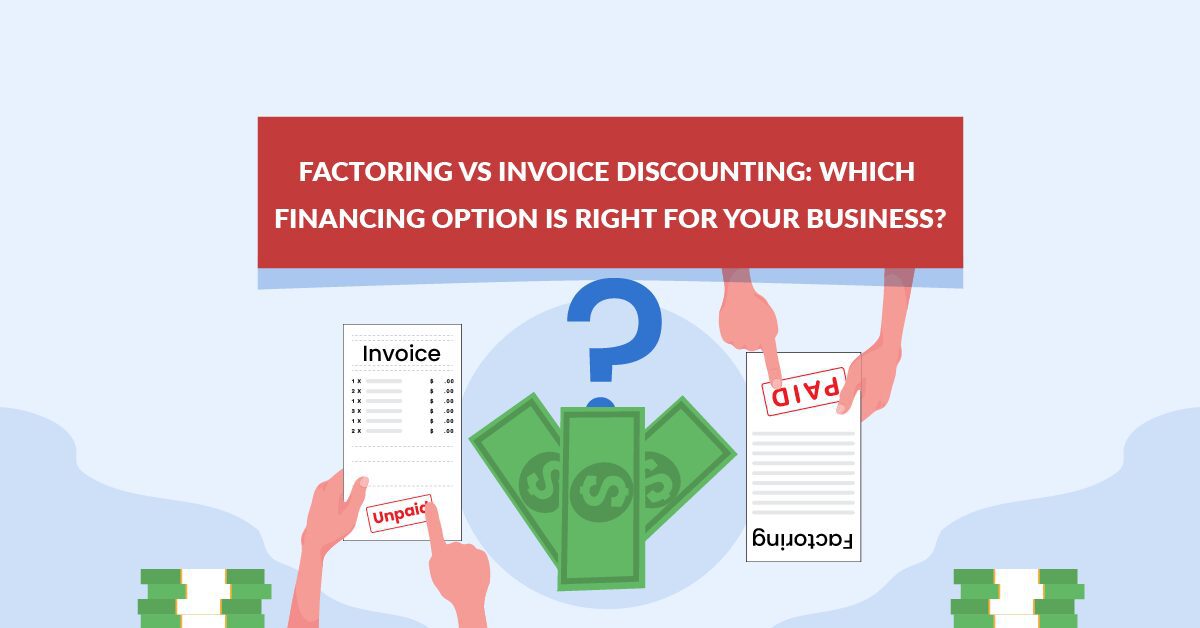
For businesses that provide credit to customers—especially in the B2B (business-to-business) space—managing cash flow can often be a challenge. Delayed payments from customers can lead to a lag in funds, making it difficult to cover expenses or invest in growth opportunities. To bridge this gap, many companies turn to accounts receivable financing. Two common methods of this financing are factoring and invoice discounting, both of which allow businesses to access cash quickly by leveraging their outstanding invoices. While both solutions are designed to improve cash flow, they work in different ways and offer distinct advantages.
In this article, we’ll explore the key differences between factoring and invoice discounting, helping you determine which option is best for your business’s needs.
What Is Factoring?
Factoring involves selling your unpaid invoices to a third-party financial company (a factor) in exchange for immediate cash. The factoring company then assumes responsibility for collecting the outstanding payments from your customers.
The process is straightforward: after your invoices are approved, the factor advances you a percentage of the invoice value (usually around 80% to 90%). Once your customers pay their bills, the factor returns the remaining balance, minus their fee. Factoring is ideal for businesses that need quick access to capital and prefer not to wait for customers to pay.
In addition to providing cash quickly, factoring can help businesses by offloading the time-consuming task of chasing late payments. Because the factor takes over collections, business owners can focus on growing their business without the added burden of managing overdue invoices.
How Factoring Works
- Approval and Submission: You submit your unpaid B2B invoices to the factoring company. The factor will assess the creditworthiness of your customers to ensure they are likely to pay.
- Immediate Cash: Once approved, the factor provides an upfront payment, typically between 80% and 90% of the total invoice value.
- Collection: The factor then takes over responsibility for collecting the payments directly from your customers.
- Final Payment: Once your customers pay the factor, you receive the remaining balance (minus fees), closing the transaction.
What Is Invoice Discounting?
Invoice discounting is another form of receivables financing, but it differs from factoring in several important ways. With invoice discounting, your business retains ownership of the invoices and continues to manage the collection process. Instead of selling the invoices to a factor, you use the unpaid invoices as collateral to secure a loan or cash advance from a financing company.
Typically, the funder will advance you a portion of the invoice amount (usually around 70% to 90%), and the business is responsible for collecting payment from the customer. Once your customer pays, you repay the funder, and any remaining balance (after fees) is released to you.
Unlike factoring, invoice discounting allows you to maintain full control over your customer relationships and collections. This option is often preferred by businesses that want the financial support of invoice financing but don’t want a third party to take over interactions with their customers.
How Invoice Discounting Works
- Approval and Submission: You submit your invoices to the invoice discounting provider for approval. The funder evaluates the quality of your receivables and the financial strength of your customers.
- Cash Advance: Upon approval, the funder advances you a percentage of the invoice value—typically 70% to 90%.
- Collection by You: Your business continues to collect payments from your customers, just as you normally would.
- Repayment and Final Payment: When the customer pays, the funder is repaid. The remaining balance, minus any fees or interest, is returned to your business.
Key Differences Between Factoring and Invoice Discounting
While both factoring and invoice discounting offer quick access to working capital, there are several important distinctions between the two options.
Control Over Collections
One of the key differences is who handles the collections process. With factoring, the factor takes on the responsibility of collecting payments from your customers, which can be a relief if you want to offload that task. This is ideal for businesses that don’t want to deal with the administrative burden of chasing overdue invoices.
On the other hand, with invoice discounting, your business retains full control over collections. You continue to manage your relationships with customers and ensure they pay their invoices. This might be preferable if your customer relationships are important to you, or if you have an established, efficient collections process.
Confidentiality
Factoring is often not confidential. When you sell your invoices to a factor, your customers are notified that their payments should be made to the factoring company. This can sometimes affect customer relationships, particularly if they are not familiar with or comfortable with the arrangement.
In contrast, invoice discounting is typically confidential. Your customers remain unaware that you’re using invoice discounting to finance your receivables. This can be beneficial for businesses that don’t want their customers to know they are relying on external financing.
Suitability for Different Business Needs
- Factoring is often a better option for businesses that need immediate cash and don’t mind outsourcing collections to a third party. It’s ideal for companies that need quick, hands-off cash flow solutions and are comfortable with the factor managing customer relationships.
- Invoice discounting is more suitable for businesses that want to maintain control over their collections and customer relationships. It’s often favored by businesses that have strong internal processes for managing receivables and prefer a more discreet form of financing.
Which Financing Option Is Right for Your Business?
The decision between factoring and invoice discounting depends on several factors, including the size and nature of your business, your cash flow needs, and how much control you want to maintain over your collections and customer relationships.
- Choose Factoring if:
- You need immediate cash flow and don’t want to spend time managing overdue invoices.
- You don’t mind a third party handling your collections and customer relationships.
- Your business is growing quickly, and you want a quick and flexible financing option.
- Choose Invoice Discounting if:
- You want to retain control over your collections and customer relationships.
- You have a strong internal collections process and don’t need external help managing payments.
- You prefer a confidential financing solution where your customers don’t know you’re using external financing.
Conclusion
Both factoring and invoice discounting are effective tools for improving cash flow and providing quick access to working capital. The right choice depends on how much control you want to maintain, the level of customer interaction you’re comfortable with, and the specific needs of your business. By carefully evaluating your cash flow requirements and operational preferences, you can choose the financing solution that best supports your growth and financial stability.