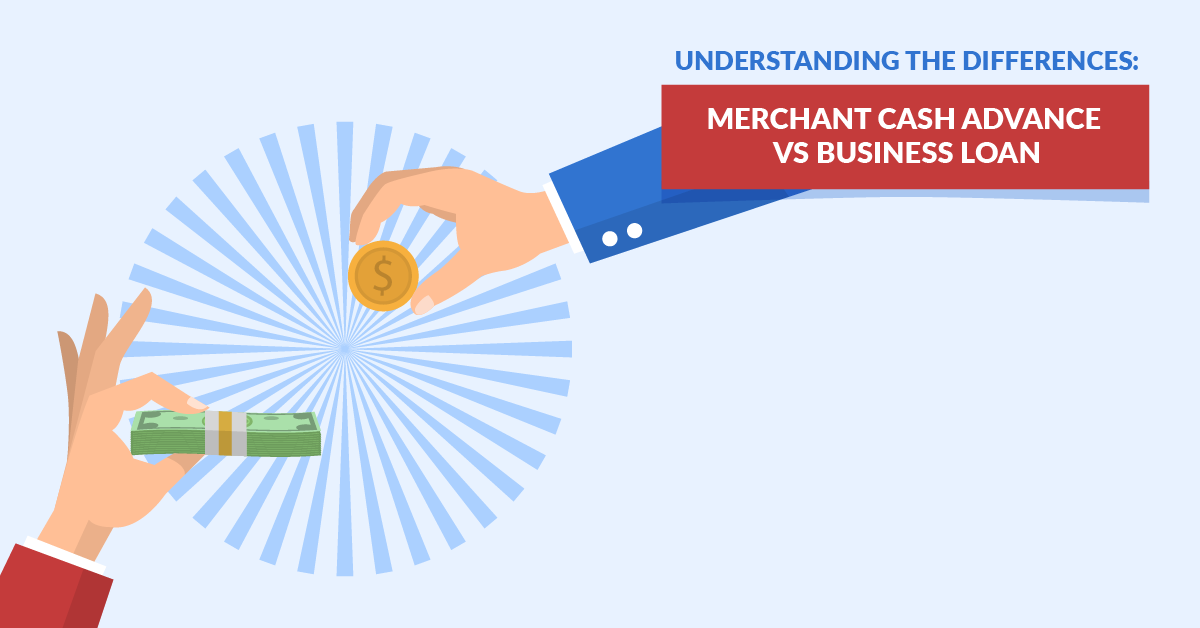
Introduction to Merchant Cash Advances and Business Loans
As a business owner, you’re always on the lookout for ways to secure the financing you need to grow and thrive. Two popular options are merchant cash advances and traditional business loan. However, it’s crucial to understand the key differences between these financing solutions to make an informed decision that aligns with your business’s unique needs.
In this comprehensive article, we’ll dive deep into the world of merchant cash advances and business loans, exploring their definitions, how they work, their respective pros and cons, and the critical factors that set them apart. By the end, you’ll have a clear understanding of which option might be the best fit for your business.
What is a Merchant Cash Advance?
A merchant cash advance (MCA) is a type of alternative financing that provides businesses with a lump-sum payment in exchange for a percentage of their future credit card or debit card sales. Unlike a traditional loan, an MCA is not structured as a loan, but rather as a purchase of a portion of the business’s future receivables.
How Does a Merchant Cash Advance Work?
The process of obtaining a merchant cash advance typically involves the following steps:
- Application and Approval: The business owner applies for an MCA, providing information about their business, sales volume, and financial history. The MCA provider then evaluates the application and determines the amount they’re willing to advance, based on the business’s projected future sales.
- Funding: Once approved, the MCA provider transfers the lump-sum payment to the business, usually within a few business days.
- Repayment: The business then repays the advance by allowing the MCA provider to automatically deduct a predetermined percentage of their daily credit card or debit card sales until the full amount is repaid, plus any applicable fees.
Pros and Cons of Merchant Cash Advances
Pros:
- Faster Funding: MCAs can often be approved and funded more quickly than traditional business loans, making them a suitable option for businesses with immediate financing needs.
- Flexible Repayment: The repayment is tied to the business’s sales, so the amount owed fluctuates with the business’s performance. This can be beneficial during periods of lower sales.
- Easier Approval: MCA providers may have more lenient approval criteria compared to traditional funders, making them a viable option for businesses that may not qualify for financing.
Cons:
- Higher Costs: MCAs typically have higher overall costs, with fees and rates that can be significantly higher than those associated with business loans.
- Potential Debt Trap: The flexible repayment structure can lead to a cycle of debt if the business is unable to repay the advance in a timely manner.
- Lack of Transparency: Some MCA providers may not be upfront about the true cost of the financing, making it difficult for businesses to compare options and make informed decisions.
What is a Business Loan?
A business loan is a more traditional form of financing, where a funder provides a specific amount of money to a business, which the business then repays over an agreed-upon period, with interest.
How Does a Business Loan Work?
The process of obtaining a business loan typically involves the following steps:
- Application and Approval: The business owner applies for a loan, providing detailed financial information, a business plan, and any collateral or personal guarantees required by the funder. The funder then evaluates the application and determines the loan amount, cost of capital, and repayment terms.
- Funding: Once approved, the funder disburses the funds to the business, usually within a few weeks.
- Repayment: The business then repays the financing through fixed, scheduled payments, which include both principal and interest, over the agreed-upon loan term.
Pros and Cons of Business Loans
Pros:
- Lower Costs: Business loans generally have lower rates and fees compared to MCAs, making them a more cost-effective financing option in the long run.
- Predictable Repayment: The fixed repayment schedule of a business loan allows for better financial planning and budgeting.
- Building Business Credit: Responsibly repaying a business loan can help build the business’s credit history, which can be beneficial for future financing needs.
Cons:
- Longer Approval Process: The application and approval process for a business loan can be more time-consuming and require more documentation than an MCA.
- Collateral Requirements: Many business loans require the business owner to provide collateral, such as real estate or equipment, to secure the loan.
- Stricter Eligibility Criteria: Funders typically have more stringent eligibility requirements, such as a minimum credit score, time in business, and financial history, which some businesses may not meet.
Key Differences Between Merchant Cash Advances and Business Loans
Here’s a table that summarizes the key differences between merchant cash advances and business loans:
| Feature | Merchant Cash Advance | Business Loan |
| Structure | Purchase of future sales | Loan with fixed repayment terms |
| Approval Criteria | Less stringent | More stringent |
| Funding Time | Faster (days) | Slower (weeks) |
| Repayment | Percentage of daily sales | Fixed, scheduled payments |
| Costs | Higher fees and fixed rates | Lower rates and fees |
| Collateral | Usually not required | Often required |
| Impact on Credit | May not report to business credit bureaus | Reported to business credit bureaus |
Which Option is Best for Your Business?
Determining whether a merchant cash advance or a business loan is the better fit for your business ultimately depends on your specific needs and circumstances. Consider the following factors when making your decision:
- Urgency of Financing: If you need funding quickly, a merchant cash advance may be the faster option. However, if you have the time to go through the more extensive application process, a business loan may be the more cost-effective choice.
- Predictability of Cash Flow: If your business has relatively stable and predictable sales, a business loan with fixed repayment terms may be the better fit. If your sales fluctuate, a merchant cash advance’s flexible repayment structure could be more suitable.
- Cost of Financing: Carefully evaluate the total costs, including fees and rates, associated with each financing option to determine which one aligns better with your budget and long-term financial goals.
- Eligibility and Credit Profile: If your business has a strong credit history and meets the eligibility criteria for a business loan, this may be the preferred option. If your credit profile is less than ideal, a merchant cash advance may be more accessible.
If you’re still unsure which financing option is the best fit for your business, I recommend speaking with a financial advisor or business funder who can provide personalized guidance and help you make an informed decision. They can review your specific situation and goals, and recommend the most suitable financing solution to support your business’s growth and success.
Conclusion
In the world of business financing, merchant cash advances and traditional business loans each offer unique advantages and disadvantages. By understanding the key differences between these two options, you can make a more informed decision that aligns with your business’s specific needs and financial goals.
Remember, the choice between a merchant cash advance and a business loan is not a one-size-fits-all solution. Take the time to carefully evaluate your options, consider your immediate and long-term financing requirements, and seek the guidance of financial professionals to ensure you select the financing solution that will best support the growth and success of your business.