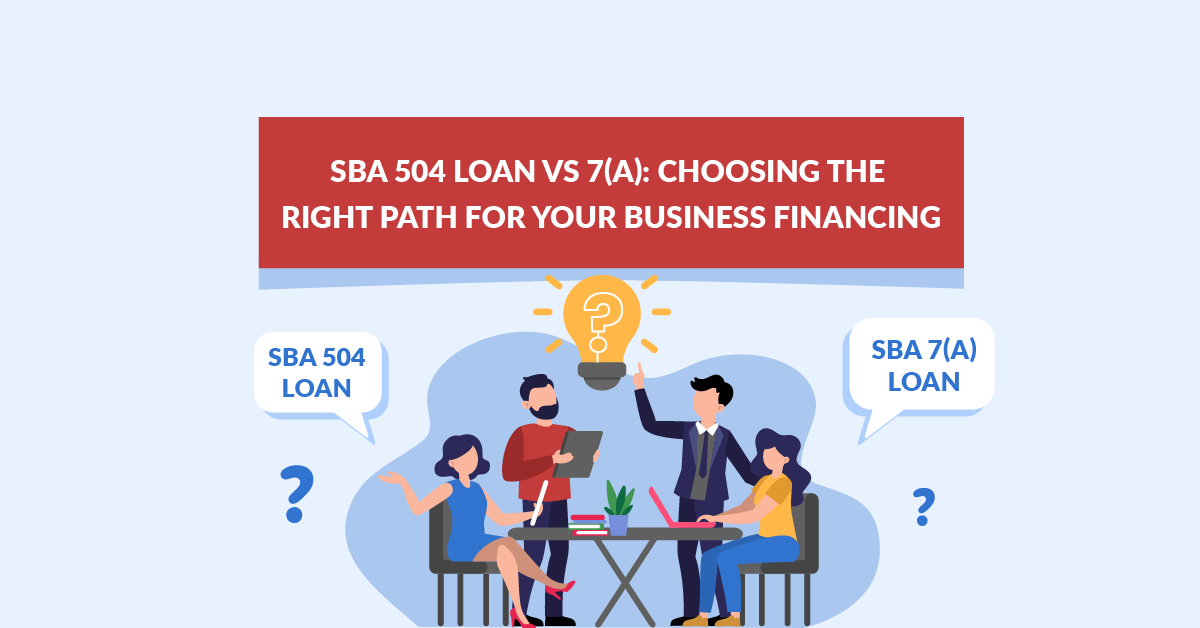
When it comes to small business financing, SBA 504 and 7(a) loans are two of the most popular options available through the U.S. Small Business Administration (SBA). Both loans offer government-backed support with attractive terms and conditions, yet each is uniquely structured to serve different purposes and needs. Understanding the distinctions between the SBA 504 loan vs 7(a) can help business owners decide which program best fits their financing goals, whether for real estate, equipment purchases, working capital, or expansion.
In this article, we’ll explore the key aspects of the SBA 504 loan vs 7(a), focusing on eligibility, uses, loan terms, and repayment structures to help guide small businesses in selecting the most suitable option.
Overview of SBA 504 and SBA 7(a) Loans
The SBA 504 and SBA 7(a) loans are designed to provide small businesses with access to funding under favorable terms. However, these two loan types differ in terms of purpose, structure, and usage.
- SBA 504 Loan: Primarily used for acquiring major fixed assets, the SBA 504 loan is ideal for businesses looking to purchase real estate, buildings, or large equipment that supports long-term growth. This program offers long-term, fixed-rate financing, making it particularly attractive for businesses with specific asset acquisition needs.
- SBA 7(a) Loan: Known for its flexibility, the SBA 7(a) loan supports a wide range of business needs, including working capital, equipment purchases, real estate acquisition, and debt refinancing. This versatility makes it a popular choice for businesses in need of broader financial support.
Key Differences: SBA 504 Loan vs 7(a)
Understanding the distinctions between the SBA 504 loan vs 7(a) is essential in determining which program aligns with a business’s current and future needs.
1. Loan Purpose and Eligibility
When comparing the SBA 504 loan vs 7(a), purpose and eligibility are major differentiators:
- SBA 504 Loan: This program is specifically geared toward businesses seeking to invest in assets that will have a lasting impact on their growth. SBA 504 loans are designed for projects such as purchasing commercial real estate, renovating facilities, or acquiring large-scale equipment. To qualify, applicants must meet SBA requirements, including being a U.S.-based for-profit business that meets SBA size standards.
- SBA 7(a) Loan: With its broader focus, the SBA 7(a) loan can be used for a variety of purposes, including inventory purchases, expansion, working capital, and even refinancing existing business debt. Eligibility requirements are similar, with the business needing to be small by SBA standards and meet general requirements such as being for-profit and operating in the U.S.
2. Loan Structure and Funding Amounts
The structure and funding amounts offered by the SBA 504 loan vs 7(a) reflect the distinct purposes of each program:
- SBA 504 Loan: Funding for SBA 504 loans typically involves three parties: a Certified Development Company (CDC), which provides 40% of the loan, a financing partner covering 50%, and the borrower contributing 10% as a down payment. The SBA 504 loan amount can range up to $5 million, or even higher for specific public policy goals or manufacturing projects.
- SBA 7(a) Loan: This loan offers more straightforward financing, with a maximum loan amount of up to $5 million. SBA 7(a) funds are generally disbursed in one lump sum, which gives borrowers flexibility in using the funds for different needs. With simpler structuring and fewer parties involved, SBA 7(a) loans provide a faster path to financing for those who require immediate access to funds.
3. Interest Rates and Repayment Terms
When weighing the SBA 504 loan vs 7(a), interest rates and repayment terms are also crucial factors to consider:
- SBA 504 Loan: The SBA 504 program offers competitive, fixed interest rates that are typically lower than market rates, making it cost-effective for long-term asset purchases. Loan terms vary based on the purpose but generally extend to 10, 20, or even 25 years for real estate, which makes repayments manageable for businesses investing in long-term growth.
- SBA 7(a) Loan: SBA 7(a) loans often come with variable interest rates, though fixed rates are available in certain cases. Interest rates are generally higher than those of SBA 504 loans but remain competitive due to SBA guarantees. Terms vary depending on the intended use of the funds, with up to 10 years for working capital and up to 25 years for real estate.
4. Down Payment Requirements
Another essential point in the SBA 504 loan vs 7(a) comparison is the down payment requirement:
- SBA 504 Loan: The SBA 504 loan requires a down payment of 10%, which makes it accessible for businesses looking to preserve capital while making a significant investment in assets.
- SBA 7(a) Loan: The down payment requirements for SBA 7(a) loans are generally higher than those of SBA 504 loans, often ranging from 10% to 30% depending on the specific terms and the borrower’s qualifications. This added flexibility may be beneficial for businesses that need funding for a variety of purposes but are prepared to contribute a larger down payment.
SBA 504 Loan vs 7(a): When to Choose Each
Choosing between the SBA 504 loan vs 7(a) depends on the specific needs and goals of a business:
- Choose SBA 504 Loan if your business is focused on acquiring real estate or significant assets that will have a lasting impact. The SBA 504 loan’s fixed interest rates, long repayment terms, and low down payment requirements make it particularly suited for businesses looking to establish or expand physical premises, invest in facilities, or acquire substantial equipment. This loan provides stability for projects that require long-term financing and gradual repayment.
- Choose SBA 7(a) Loan if your business requires more flexible funding to cover a variety of needs, from working capital to expansion. With options for working capital, inventory, refinancing, and equipment, SBA 7(a) loans are versatile and accessible. They are a great choice for businesses that need funding for immediate growth, short-term goals, or smaller purchases and projects. The flexibility and quicker approval timeline make SBA 7(a) loans ideal for businesses needing adaptable, comprehensive financing.
Advantages and Limitations: SBA 504 Loan vs 7(a)
Both SBA 504 and 7(a) loans come with their own set of benefits and limitations.
SBA 504 Loan Advantages:
- Long-term, fixed interest rates provide cost savings over time.
- Lower down payment requirements help businesses conserve cash.
- Structured to support substantial investments in physical assets and equipment.
SBA 504 Loan Limitations:
- Restricted to specific uses, such as real estate and asset purchases, limiting flexibility.
- Loan amounts may not cover all funding needs for businesses seeking more extensive support.
SBA 7(a) Loan Advantages:
- Versatile funding for working capital, debt refinancing, and inventory purchases.
- Higher flexibility with no restrictions on purpose, allowing businesses to allocate funds where they’re needed most.
- Faster approval process and less complex structuring.
SBA 7(a) Loan Limitations:
- Higher down payment requirements may require more up-front capital.
- Variable interest rates could mean fluctuating monthly payments, making long-term budgeting more challenging.
Conclusion
Understanding the differences between the SBA 504 loan vs 7(a) can help business owners choose a financing option that aligns with their goals and financial situation. SBA 504 loans offer stability with long-term fixed rates, making them ideal for major asset purchases. Conversely, SBA 7(a) loans provide flexibility for a broader range of needs, empowering businesses to address short- and long-term goals without restrictions on fund allocation.
Both programs are valuable tools for growth, but selecting the right one depends on the business’s specific needs, from asset acquisition to working capital. By carefully considering the purpose, repayment structure, and eligibility requirements, businesses can make an informed decision on whether SBA 504 or 7(a) financing is the most beneficial pathway to their success.