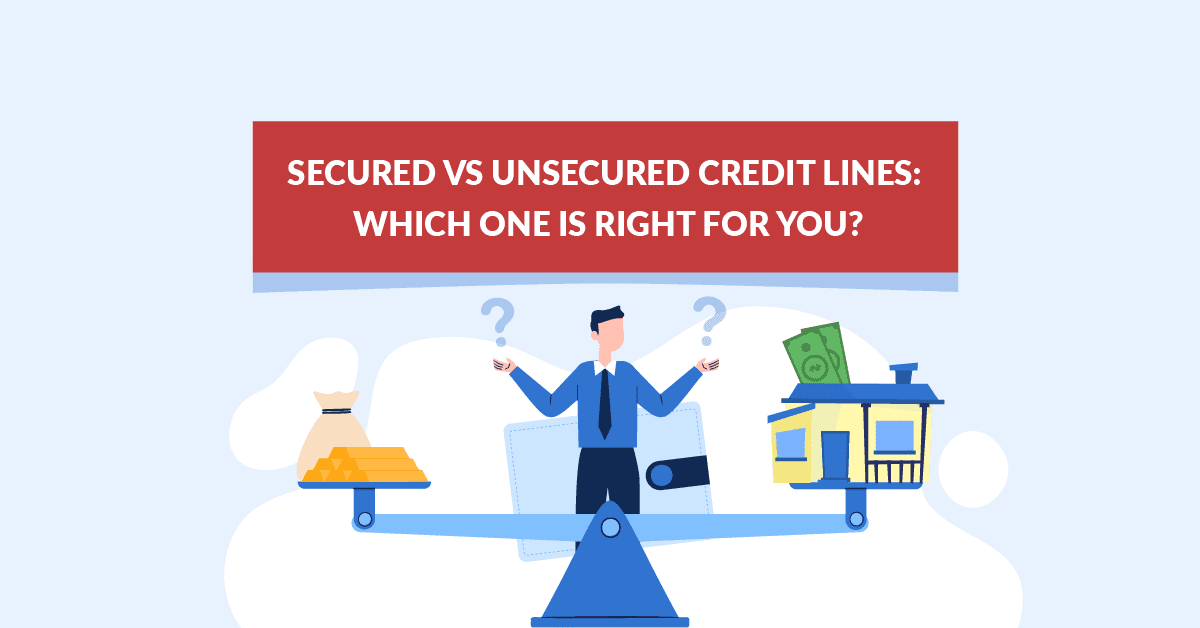
When it comes to accessing a credit line for your business, one of the most important decisions you’ll face is choosing between a secured or unsecured credit line. Each has its own benefits and considerations, and understanding these differences can help you make the right choice for your financial needs. In this article, we’ll break down the key differences between secured and unsecured credit lines, and help you determine which option is best suited for your business.
What Is a Secured Credit Line?
A secured credit line is a credit account backed by collateral. This collateral can be in the form of business assets such as equipment, inventory, or even real estate. If your business is unable to make payments, the funder has the right to seize the collateral to recover the debt.
Key Features of Secured Credit Lines:
- Collateral Requirement: You must pledge an asset to secure the line of credit.
- Lower Risk for Funders: Because the credit line is backed by collateral, funders face less risk if your business defaults. This can make it easier for businesses with lower credit scores to access financing.
- Potentially Lower Costs: Secured credit lines may offer lower rates or better terms because they are considered less risky for funders.
What Is an Unsecured Credit Line?
An unsecured credit line, on the other hand, does not require collateral. Instead, your business’s financial health, creditworthiness, and business performance serve as the basis for approval. Since the funder doesn’t have a tangible asset to claim in case of default, unsecured credit lines typically come with higher rates and stricter requirements.
Key Features of Unsecured Credit Lines:
- No Collateral: You don’t need to provide any physical assets to secure the credit line.
- Higher Risk for Funders: Because there is no collateral, funders assume a greater risk in case of non-payment. This often results in higher costs or rates.
- Flexibility: Since no specific asset is tied to the credit line, your business has greater flexibility in how you use the funds.
Secured vs. Unsecured Credit Lines: Key Differences
1. Collateral Requirements
- Secured: Requires collateral such as real estate, equipment, or accounts receivable.
- Unsecured: No collateral is required. The credit decision is based on your creditworthiness and financial standing.
2. Risk for the Funder
- Secured: Lower risk since the funder has access to assets in case of default.
- Unsecured: Higher risk for the funder, as there is no collateral to fall back on.
3. Rates and Terms
- Secured: Typically lower rates and more favorable repayment terms, as the funder’s risk is mitigated.
- Unsecured: Might have higher rates and less favorable repayment terms due to the higher risk involved.
4. Accessibility Based on Credit History
- Secured: Easier to obtain for businesses with lower credit scores or limited credit history. The collateral provides the funder with added security.
- Unsecured: Requires a stronger credit history, as funders rely solely on your business’s ability to repay based on financial performance and credit score.
5. Flexibility of Use
- Secured: While the funds can be used for business expenses, funders may place restrictions on how the credit line can be accessed, based on the collateral.
- Unsecured: Funds can typically be used for any legitimate business purpose, offering greater flexibility.
Advantages and Disadvantages of Secured Credit Lines
Advantages:
- Lower Rates: Because they’re less risky for funders, secured credit lines usually come with lower rates than unsecured options.
- Easier Approval: If your business has limited credit history or a low credit score, offering collateral can increase your chances of approval.
- Higher Credit Limits: Since the funding is secured, funders may be willing to extend larger credit limits.
Disadvantages:
- Risk of Losing Collateral: If your business is unable to repay the credit line, the funder has the right to seize your assets.
- More Complicated Application: You’ll need to provide detailed information about your collateral, which can add complexity to the application process.
- Potential for Limited Use of Funds: In some cases, the funder may impose restrictions on how the funds can be used, based on the nature of the collateral.
Advantages and Disadvantages of Unsecured Credit Lines
Advantages:
- No Collateral Required: Your business doesn’t have to risk valuable assets, such as equipment or real estate.
- Flexibility: There are typically fewer restrictions on how the funds can be used, giving you more freedom to allocate the credit for various business needs.
- Simpler Application Process: Since no collateral is involved, the application process is often simpler and faster.
Disadvantages:
- Higher Rates: Unsecured credit lines might come with higher rates, reflecting the increased risk to the funder.
- Tougher Qualification Criteria: To qualify for an unsecured credit line, your business must have a strong credit history and proven financial stability.
- Lower Credit Limits: Since there is no collateral to fall back on, unsecured lines may have lower credit limits compared to secured ones.
Which One Is Right for Your Business?
Choosing between a secured and unsecured credit line depends on your business’s financial situation, your ability to offer collateral, and how you plan to use the credit. Below are some factors to consider when making your decision:
Consider a Secured Credit Line if:
- Your business has valuable assets that you’re willing to pledge as collateral.
- You need a larger credit line and can afford the potential risk of losing assets.
- Your business has a less-than-perfect credit score, but you can demonstrate strong asset value.
- You want to access lower rates and more favorable repayment terms.
Consider an Unsecured Credit Line if:
- Your business does not have sufficient assets to pledge as collateral or you prefer to keep your assets unencumbered.
- You are looking for more flexibility in how the funds are used.
- Your business has a strong credit score and financial history, making you eligible for unsecured credit.
- You prefer to avoid the risk of losing valuable assets but are willing to accept higher rates and potentially lower credit limits.
How to Prepare for Either Option
Whether you’re considering a secured or unsecured credit line, preparation is key to increasing your chances of approval. Here are some tips to help:
- For a Secured Credit Line:
- Ensure your collateral is valuable and easily verifiable.
- Make sure your business is in good financial standing with strong revenue and a solid track record of timely payments.
- For an Unsecured Credit Line:
- Keep your business credit score high.
- Maintain strong cash flow and be ready to provide financial statements that demonstrate your ability to repay the credit line.
- Be prepared to explain how you’ll use the funds and how they’ll contribute to your business’s growth.
Key Takeaways
Both secured and unsecured credit lines offer valuable benefits, but they come with different risks and rewards. A secured credit line can provide more favorable terms and higher limits, but it requires offering collateral that could be at risk. An unsecured credit line offers more flexibility and requires no collateral, but it may come with higher costs and stricter qualification criteria.
By evaluating your business’s financial health, asset availability, and funding needs, you can choose the credit line that best suits your situation. Whether you’re looking for more flexibility or a lower rate, understanding your options is crucial for making the right decision for your business.