When your business is waiting on customer payments, cash flow can become a significant challenge. Accounts receivable (AR) financing provides a solution by allowing you to sell outstanding invoices to a factoring company in exchange for immediate cash. This helps businesses maintain operations without having to wait for customers to settle their invoices.
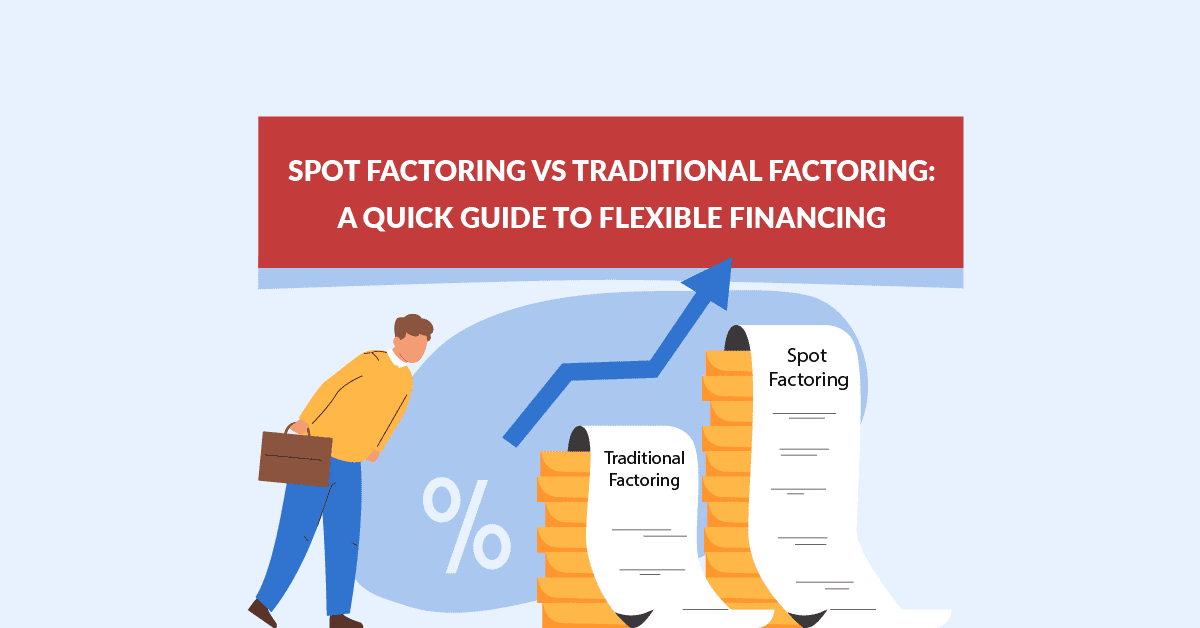
There are two main types of invoice factoring—spot factoring and traditional factoring. While both options can boost your cash flow, they operate differently and offer distinct advantages depending on your business’s needs. Let’s break down the key differences and determine which option is right for your company.
What Is Factoring?
Factoring is a financial solution where businesses sell their accounts receivable (unpaid invoices) to a third-party company, called a factor, at a discounted rate. In return, the business receives a lump sum of cash upfront, allowing them to avoid waiting for customers to pay their invoices. This improves liquidity and ensures the business can cover its immediate expenses, such as payroll, bills, and inventory.
The factoring company then collects the payment from the customer directly. Once the customer pays, the factor releases the remaining balance minus a small fee.
What Is Spot Factoring?
Spot factoring (sometimes called single invoice factoring) is a type of factoring where businesses choose to sell a single invoice or a few invoices as needed. This approach is highly flexible and allows you to access cash only when you need it.
With spot factoring, you don’t have to factor all of your receivables—just the invoices that will help your business bridge specific cash flow gaps. This makes it an ideal option for businesses that want to avoid long-term contracts or those with more sporadic cash flow needs.
How Spot Factoring Works
Spot factoring is a simple, one-time process. Here’s a step-by-step breakdown of how it works:
- Choose the Invoice(s): You decide which invoice or invoices you want to factor. It can be for a single transaction or a small group of unpaid invoices.
- Submit for Approval: After submitting the invoice(s), the factoring company will evaluate the creditworthiness of your customers. Approval is typically fast, sometimes taking as little as a few hours.
- Receive an Advance: Upon approval, the factor advances you a percentage of the invoice value (usually 80%-90%). The funds are typically deposited into your account in as little as 3 to 10 days.
- Customer Payment: Your customer pays the factoring company directly when the invoice is due.
- Final Payment: After the customer settles the invoice, the factor will release the remaining balance, minus a factoring fee.
What Is Traditional Factoring?
Traditional factoring (also called full-service factoring) involves entering into a longer-term agreement with a factoring company. In this arrangement, businesses sell a larger volume of invoices over a specified period, often months or even years.
Traditional factoring is typically used by companies that have frequent, predictable invoices and need ongoing cash flow support. The business works with the factoring company to sell invoices in bulk, allowing them to secure regular cash advances based on their receivables.
How Traditional Factoring Works
The process for traditional factoring involves multiple invoices and is typically structured over a longer period. Here’s how it works:
- Sign an Agreement: The business and the factoring company sign a contract outlining the terms of the factoring relationship. This includes the length of the agreement and the types of invoices that will be factored.
- Submit Invoices Regularly: The business submits batches of invoices to the factor. The factor will assess the creditworthiness of the customers before agreeing to advance funds.
- Receive Cash Advances: The factor advances a percentage of the invoice value (typically 80%-90%) for each batch of invoices submitted.
- Customer Payment: When customers pay the invoices, the factoring company receives the payment directly.
- Final Payment: After the customer’s payment is received, the factor pays the business the remaining balance of the invoice(s), minus their fee.
Key Differences Between Spot Factoring and Traditional Factoring
Both spot factoring and traditional factoring are useful for improving cash flow, but they differ in several key areas. Here’s a quick comparison:
1. Flexibility
- Spot Factoring: Offers maximum flexibility because you can choose to factor individual invoices as needed. If your cash flow issues are temporary or irregular, spot factoring lets you access funds on a case-by-case basis.
- Traditional Factoring: Requires a long-term commitment. Once you enter into a contract, you are typically obligated to factor a certain volume of invoices over a longer period, such as six months or a year.
2. Commitment
- Spot Factoring: You’re not bound by an ongoing contract. You factor only the invoices you want, giving you complete control over which invoices to sell and when.
- Traditional Factoring: Often involves a long-term agreement that can last several months or even years. This means regular invoice submissions are expected, which works well for businesses with consistent receivables.
3. Volume of Invoices
- Spot Factoring: Ideal for businesses that only need to factor a small number of invoices at a time, or those that prefer not to sell their entire receivables portfolio.
- Traditional Factoring: Best suited for companies that have a high volume of invoices or consistent cash flow needs and require regular funding.
4. Customer Relationships
- Spot Factoring: Allows you to maintain more control over your customer relationships, as the factoring company only steps in for specific invoices. Customers may not even know that their invoice has been factored, giving you more control over your interactions.
- Traditional Factoring: Because the factoring company handles collections for the invoices they purchase, your customers may be aware of the factoring relationship. This could potentially impact your business’s relationship with customers if they feel uncomfortable with the third-party involvement.
Which Option Is Right for Your Business?
Choosing between spot factoring and traditional factoring depends on the specific needs of your business. Here’s a breakdown of which type of factoring is best suited for different business scenarios:
- Spot Factoring is ideal for businesses that:
- Have irregular or unpredictable cash flow.
- Need quick cash for specific invoices without entering into a long-term agreement.
- Want flexibility and prefer not to commit to factoring all their receivables.
- Have sporadic invoicing needs and don’t want to factor invoices regularly.
- Traditional Factoring is best for businesses that:
- Have a steady stream of receivables and need consistent cash flow support.
- Can commit to an ongoing relationship with a factoring company.
- Require regular working capital to meet operational expenses.
- Prefer to outsource collections and ensure invoices are consistently paid on time.
Conclusion: Choose the Factoring Option That Fits Your Needs
Whether your business needs flexibility or a steady stream of cash, factoring can help bridge the gap between delivering goods or services and receiving payment. By understanding the differences between spot factoring and traditional factoring, you can select the solution that best matches your cash flow needs.
If you’re looking for flexibility and only need to factor an occasional invoice, spot factoring is an ideal choice. If your business has regular receivables and you need a more structured solution, traditional factoring could provide the consistent cash flow you need to keep operations running smoothly.